
Opening Ceremony
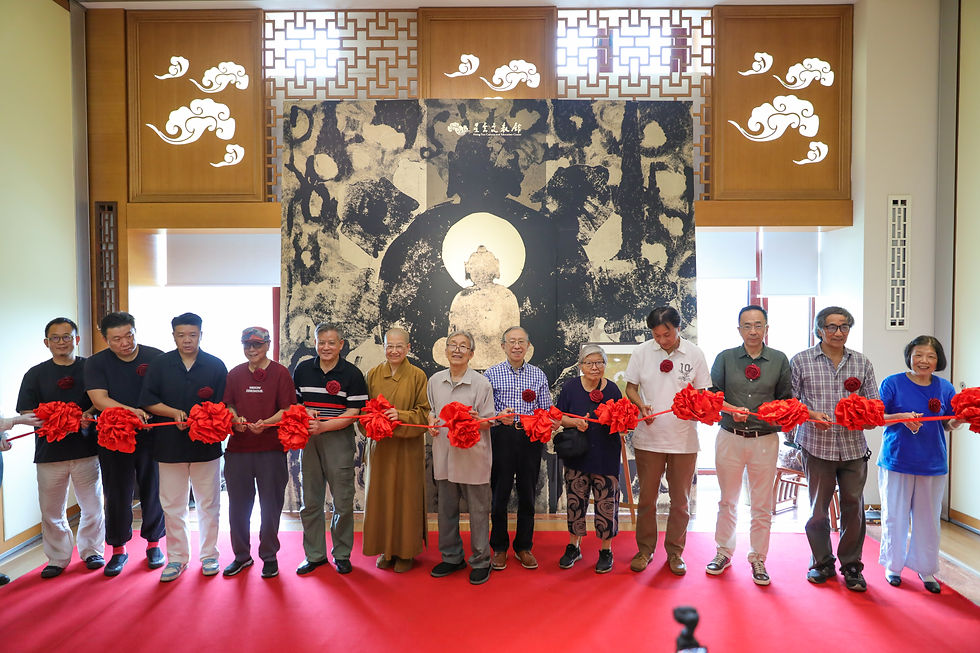
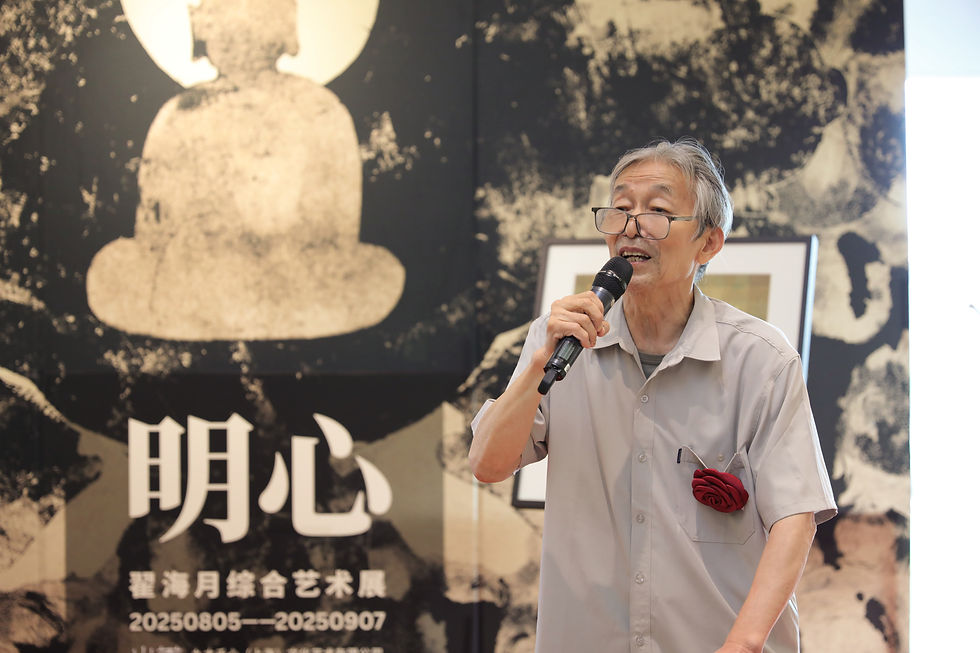
On August 10, 2025, the opening ceremony of "Enlightenment: Zhai Haiyue's Comprehensive Art Exhibition" was held at the renowned Xingyun Cultural and Educational Center in Shanghai, China. Artist Zhai Haiyue fuses Zen with contemporary visual language, constructing a Zen space that transcends form and directly touches the heart. This makes Zen imagery not only an object of contemplation but also a vital bridge for disseminating ideas and connecting cultures.



陈燮君 Chen Xiejun
原上海博物馆馆长,上海图书馆副馆长,上海市美术家协会理事,中国2010年上海世博会总策划师,博士生导师,教授
Former Director of the Shanghai Museum, Deputy Director of the Shanghai Library, Director of the Shanghai Artists Association, Chief Planner of the 2010 Shanghai World Expo, doctoral supervisor, and professor

刘亚平 Liu Yapin
上海师范大学美术学院副院长,教授,美术学硕士生导师,上海市美术家协会常务理事
Vice Dean of the School of Fine Arts, Shanghai Normal University, professor, master's supervisor of fine arts, and executive director of the Shanghai Artists Association
翟祖华 Zhai Zuhua
(Di Zuhua)
上海市第二工业大学艺术与设计学院院长,教授,油画家,水彩画家,陶艺家,壁画艺术家,平面设计师,艺术教育家
Dean and Professor of the School of Applied Arts, Shanghai Second Polytechnic University,Oil painter, watercolorist, ceramicist, mural artist, graphic designer, art educator

翟天宁(Zhai Tianning)
资深室内设计师,【小满首作】品牌主理人、九木千心文化艺术创始人,软装设计师,陶艺家,艺术策展人,艺术教育家
Senior interior designer, 【Xiaoman's first work】Brand manager, founder of Jiumu Qianxin Culture and Art, soft furnishing designer, ceramic artist, art curator, art educator

徐龙宝 Xu Longbao
原上海大学美术学院教授,硕士生导师,上海美术家协会理事,上海美术家协会版画艺委会副主任.
Former professor and master's supervisor at the School of Fine Arts of Shanghai University, director of the Shanghai Artists Association, and deputy director of the Printmaking Art Committee of the Shanghai Artists Association.

李旭峰
浦东新区规划设计研究院院长
President of Shanghai Pudong New Area Planning and Design Institute, China

张展 Zhang zhan
原上海市第二工业大学艺术与设计学院院长,教授,联合国上海设计之都促进中心主任,创意中国设计联盟副主席、上海艺术专业学位研究生教育指导委员会副主任
Former Dean of the School of Applied Arts, Shanghai Second Polytechnic University, Professor, Director of the United Nations Shanghai City of Design Promotion Center, Vice Chairman of the Creative China Design Alliance, and Deputy Director of the Shanghai Art Professional Degree Graduate Education Steering Committee

高艺峰(Gao Yifeng)
原上海乐天陶社总监,中国陶瓷艺术家协会副秘书长、河北省青年美术家协会陶艺委员会主任
Former Director of Shanghai Lotte Pottery Studio, Deputy Secretary-General of the China Ceramic Artists Association, and Director of the Ceramics Committee of the Hebei Youth Artists Association


从艺术觉察到文化传播
From Artistic Awareness to Cultural Dissemination
De la Conscience Artistique à la Diffusion Culturelle
2008年,通过美国加州太平洋大学艺术系教授Jill Vasileff的引介,艺术家开始接触盖里版创作,关注实验艺术中禅学的多样性表现。2020年,受英国著名艺术家、博士生导师Christopher Cook 邀请访问英国,艺术家研究以综合材料版画结合自身禅学研究为基础,以艺术觉察和文化传播之间的深刻流动而锚定展开。
历史上,版画与佛教艺术早已结下深厚渊源。最早可追溯至唐代敦煌868年的《金刚经》(现藏于大英图书馆),堪称世界现存最早的佛教版画图像文献。自此,佛教图像、曼陀罗、藏经佛像等借由木刻、雕版等版画技术广泛流传。现代以来,这一传统在当代艺术中得到新的延伸,当代艺术家将佛教精神图像以丝网版、铜版、综合材料等多元媒介再造,使佛教艺术从宗教礼仪延展为哲学性视觉语言,在国际语境下重新焕发活力。
另一方面,英国皇家版画协会(Royal Society of Painter-Printmakers)要求艺术家须亲自构思图像、监督印制过程、并以限量签名编号的形式呈现原作。通过这一机制,艺术家得以将自身长期打磨的重要作品以规范的方式进入公共视野,实现作品的哲学精神、视觉语言与文化价值的同步传达。
在此背景下,综合材料版画,打破了独幅绘画艺术作品的传播和流通困境,建立了一种艺术与可及性之间的“微妙平衡”。借助版画原作的国际规范,以可承受价格和有限的保有量为基础,使其更具学术性和传播能量。
而禅学题材作品与综合材料版画的结合,更是推动当代艺术表现的文化与哲学重构。禅宗图像强调心性观照与象征抽离,其意境、留白性与东方美学思维密切相关。通过图像“删繁就简”,转化为当代感知的节奏语言,在版画中形成了“以技入心”的媒介融合。例如曼陀罗构图、佛像的抽象剪影、波罗蜜的肌理重建,洒金,泥金宣纸的材质美感,都为今天的当代视觉经验注入了来自佛教传统的内在智慧。
而这一切通过艺术家持续的实验,使得禅宗图像不仅成为静观之物,也成为传播思想、连接文化的重要桥梁。
English Version
In 2008, introduced by Professor Jill Vasileff of the University of the Pacific's Department of Art in California, the artist began exploring Giclée printmaking, focusing on the diverse expressions of Zen in experimental art. In 2020, invited by the renowned British artist and doctoral supervisor Christopher Cook, the artist visited the UK to research composite material printmaking combined with their Zen studies, anchoring their work in the profound flow between artistic awareness and cultural dissemination.
Historically, printmaking has had deep ties with Buddhist art. The earliest example, the Diamond Sutra from Dunhuang in 868 AD (now housed in the British Library), is considered the world's oldest extant Buddhist woodblock print document. Since then, Buddhist images, mandalas, and sutra-block Buddhas have been widely circulated through woodblock and engraving techniques. In modern times, this tradition has found new extensions in contemporary art, where contemporary artists reinterpret Buddhist spiritual imagery using diverse media such as silkscreen, copperplate, and mixed media. This process extends Buddhist art from religious ritual to a philosophical visual language, reinvigorating it in an international context.
On the other hand, the Royal Society of Painter-Printmakers in the UK requires artists to personally conceive the images, supervise the printing process, and present original works in limited, signed, and numbered editions. Through this mechanism, artists can bring their significant, long-refined works into public view in a standardized manner, achieving a synchronous transmission of the work's philosophical spirit, visual language, and cultural value.
In this context, mixed media printmaking breaks the barriers to the dissemination and circulation of unique painting artworks, establishing a "subtle balance" between art and accessibility. By adhering to international standards for original prints, based on affordable prices and limited availability, it gains greater academic and communicative power.
The combination of Zen-themed works with mixed media printmaking further promotes the cultural and philosophical reconstruction of contemporary artistic expression. Zen imagery emphasizes the observation of the mind's nature and symbolic abstraction, with its artistic conception, use of negative space, and Eastern aesthetic thinking being closely related. By "simplifying complexity" in imagery, transforming it into a rhythmic language of contemporary perception, it forms a "skill-to-heart" media integration in printmaking. For example, mandala compositions, abstract silhouettes of Buddha images, the textural reconstruction of Prajnaparamita (Perfection of Wisdom), the application of gold leaf, and the material beauty of golden-dusted Xuan paper all infuse today's contemporary visual experience with inherent wisdom from the Buddhist tradition.
All of this, through the artist's continuous experimentation, ensures that Zen imagery not only becomes an object for contemplation but also an important bridge for disseminating thought and connecting cultures.
Version Française
En 2008, grâce à l'introduction de Jill Vasileff, professeure au département d'art de l'Université du Pacifique en Californie (États-Unis), l'artiste a commencé à s'intéresser à la création de gravures Giclée, se concentrant sur les diverses expressions du Zen dans l'art expérimental. En 2020, invité par le célèbre artiste britannique et directeur de thèse Christopher Cook, l'artiste s'est rendu au Royaume-Uni pour approfondir la gravure en techniques mixtes, enracinant sa recherche sur le Zen dans le flux profond entre la conscience artistique et la diffusion culturelle.
Historiquement, la gravure a des liens profonds avec l'art bouddhique. Le plus ancien exemple, le Sūtra du Diamant de Dunhuang datant de 868 apr. J.-C. (aujourd'hui conservé à la British Library), est considéré comme le plus ancien document iconographique bouddhique gravé sur bois existant au monde. Depuis lors, les images bouddhiques, les mandalas et les effigies de Bouddha des sutras ont été largement diffusés grâce aux techniques de gravure sur bois et de xylographie. À l'époque moderne, cette tradition a connu de nouvelles extensions dans l'art contemporain, où les artistes réinterprètent l'imagerie spirituelle bouddhique en utilisant des médias divers tels que la sérigraphie, la gravure sur cuivre et les techniques mixtes. Ce processus étend l'art bouddhique du rituel religieux à un langage visuel philosophique, le revigorant dans un contexte international.
D'autre part, la Royal Society of Painter-Printmakers (Société Royale des Peintres-Graveurs) au Royaume-Uni exige des artistes qu'ils conçoivent personnellement les images, supervisent le processus d'impression et présentent des œuvres originales sous forme d'éditions limitées, signées et numérotées. Grâce à ce mécanisme, les artistes peuvent présenter leurs œuvres importantes, longuement affinées, au public de manière standardisée, assurant une transmission synchrone de l'esprit philosophique, du langage visuel et de la valeur culturelle de l'œuvre.
Dans ce contexte, la gravure en techniques mixtes, brise les barrières de la diffusion et de la circulation des œuvres d'art uniques, établissant un "équilibre subtil" entre l'art et l'accessibilité. En adhérant aux normes internationales pour les estampes originales, basée sur des prix abordables et une disponibilité limitée, elle acquiert une plus grande puissance académique et communicative.
La combinaison d'œuvres à thème zen et de gravures en techniques mixtes favorise en outre la reconstruction culturelle et philosophique de l'expression artistique contemporaine. L'imagerie zen met l'accent sur l'observation de la nature de l'esprit et l'abstraction symbolique, son intention artistique, l'utilisation de l'espace négatif et la pensée esthétique orientale étant étroitement liées. En "simplifiant la complexité" dans l'imagerie, en la transformant en un langage rythmique de la perception contemporaine, elle forme une intégration médiatique "de la technique au cœur" dans la gravure.
Par exemple, les compositions de mandalas, les silhouettes abstraites d'images de Bouddha, la reconstruction texturale de la Prajnaparamita (Perfection de la Sagesse), l'application de feuilles d'or et la beauté matérielle du papier Xuan saupoudré d'or, tout cela infuse l'expérience visuelle contemporaine d'aujourd'hui avec la sagesse inhérente de la tradition bouddhique.
Tout cela, grâce à l'expérimentation continue de l'artiste, garantit que l'imagerie zen ne devient pas seulement un objet de contemplation, mais aussi un pont important pour la diffusion de la pensée et la connexion des cultures.